

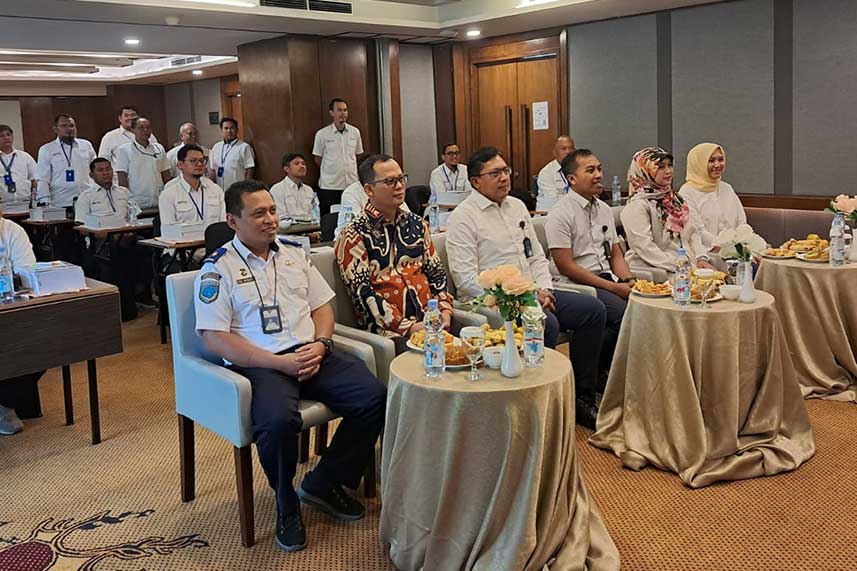
Jakarta, November 5, 2024 – IPC Terminal Petikemas (IPC TPK), a subsidiary of Pelindo Terminal Petikemas, organized a Training and Certification Program on the IMDG Code at the port in accordance with the IMO Model Course 1.10. This initiative aims to implement the Ministry of Transportation Regulation No. 16 of 2021 regarding Procedures for Handling and Transporting Dangerous Goods at Ports and to enhance the operational staff’s understanding of handling and transporting dangerous goods.
The program was inaugurated by Capt. Renaldo Sjukri, Head of the Sub-Directorate for Disaster Management and Underwater Works at KPLP, representing the Director of KPLP, and Yanuar Evyanto, Director of Finance, HR, & Risk Management at IPC TPK. In his remarks, Yanuar emphasized that this program is part of the company’s efforts to provide optimal services to clients, particularly by ensuring personnel competency in handling and transporting dangerous goods at ports.
The event was attended by Yudi Ratnanto, Head of Port Supervision Section at KSOP Tanjung Priok, who delivered guidance on behalf of KSOP Tanjung Priok; Ahmad Mimbar, Director of Operations & Engineering at IPC TPK; representatives from KSOP Tanjung Priok; IPC TPK management; and 25 operational team members from IPC TPK participating in the training and certification. The training, conducted from November 4 to November 8, 2024, at El Hotel, Kelapa Gading, is facilitated by Atrhaya Training Center.
The primary objectives of the program include:Enhancing the supervision and control of dangerous goods. Implementing procedures for handling dangerous goods in compliance with established international and national regulations, Developing and broadening business ethics, Promoting environmental preservation, Increasing operational efficiency, Minimizing risks associated with improper procedures due to insufficient knowledge and skills among personnel, This initiative aligns with IPC TPK’s commitment to achieving High Performance Zero Accident.
“We plan to conduct this training and certification across six IPC TPK operational areas. The goal is to ensure that IPC TPK personnel possess the necessary knowledge and skills to handle these goods in accordance with international safety standards,” Yanuar concluded.
Transporting dangerous goods by sea poses unique challenges. Each step, from loading to transport and unloading, must adhere to stringent safety protocols to prevent accidents, economic losses, and environmental damage. The International Maritime Dangerous Goods Code (IMDG Code) serves as a globally recognized standard to ensure the safe handling of dangerous goods at sea in compliance with international regulations.