

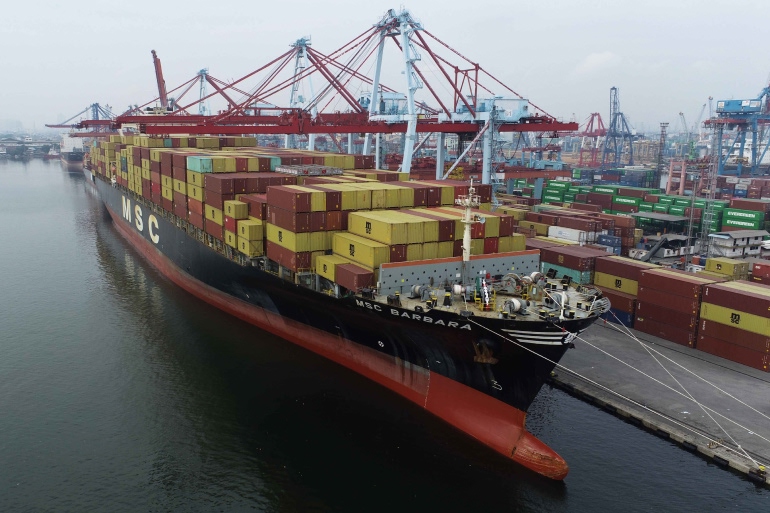
Jakarta, March 14, 2025 – By the end of the second week of Ramadan, IPC Terminal Petikemas (IPC TPK) at Tanjung Priok has experienced a significant increase in cargo traffic. This surge was triggered by the simultaneous berthing of vessels across all terminals, both for domestic and international routes. The busy berthing schedule has also led to increased vehicle movement around the port for receiving and delivery activities.
“We prioritize smooth cargo distribution throughout Ramadan to ensure the availability of goods in the market. Operations continue to run normally without issues related to systems, facilities, or equipment. To maintain efficiency, we are strengthening coordination with stakeholders at Tanjung Priok Port to optimize port operations,” said Pramestie Wulandary, Corporate Secretary of IPC TPK.
The close scheduling of vessel arrivals has caused a spike in receiving/delivery activities within the terminal, contributing to heavy traffic congestion in the port area. As of March 13, 2025, data shows that 4,287 container trucks have entered and exited Tanjung Priok Container Terminal 1 and Terminal 2 for cargo operations.
To manage this surge in cargo flow and traffic, IPC TPK has implemented several strategic measures, including:
✅ Coordinating with the Main Port Authority, Tanjung Priok Port Police, and Pelindo Regional 2 Tanjung Priok Branch to regulate vehicle movement.
✅ Advising shipping lines to manage cargo storage at the port.
✅ Preparing designated parking areas to ease vehicle congestion entering the terminals.
✅ Coordinating with Customs to regulate export and import container stacking areas.
In response to the increased cargo traffic, IPC TPK is ensuring the readiness of loading and unloading equipment and facilities, as well as deploying round-the-clock (24/7) operations to handle cargo activities. Additionally, the company is accelerating gate services and optimizing equipment usage to expedite truck movement for receiving and delivery processes.
“We urge service users to plan their cargo shipments efficiently to optimize loading and unloading operations within the port,” Pramestie concluded.