

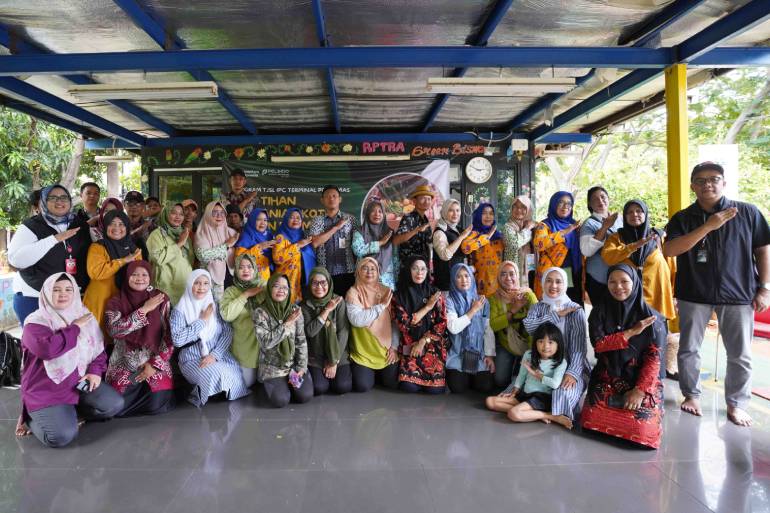
Jakarta, November 7, 2025 – Overcast skies, cool air, and well-arranged garden facilities and children’s play areas created a comfortable atmosphere for participants of the Urban Farming training held at the Child-Friendly Integrated Public Space (RPTRA) Green Bisma in Papanggo Subdistrict. The enthusiasm of the participants was evident from start to finish during the training organized by IPC Terminal Petikemas (IPC TPK) as a tangible form of its community development program in the port’s surrounding area.
This urban farming training program is a continuation of the “Papanggo Compost Corner” initiative previously launched by IPC TPK. Through that program, IPC TPK provided organic waste processing facilities to support integrated waste management and foster new economic value from household waste. The compost produced by the community is now used as planting media in urban farming activities, creating a sustainable circular economy — turning waste into productive resources.
“This activity aligns with IPC TPK’s commitment to bringing sustainability value from the port to the community, creating positive environmental impact while opening new economic opportunities,” said Pramestie Wulandary, Corporate Secretary of IPC TPK.
IPC Terminal Petikemas organized a Social and Environmental Responsibility (TJSL) program in the form of Urban Farming Training for residents of Papanggo, North Jakarta. This initiative supports Sustainable Development Goal (SDG) No. 11: Sustainable Cities and Communities. The training, attended by 30 participants, was held at RPTRA Green Bisma Papanggo.
The program not only focuses on optimizing limited urban land for productivity but also promotes social and economic empowerment for vulnerable groups, especially housewives. Participants were equipped with planting skills that could potentially increase household income while raising awareness of environmental preservation. This is in line with IPC TPK’s commitment to Diversity, Equity, and Inclusion (DEI) — ensuring equal opportunities for all community members to grow and thrive.
Under the theme “Planting Goodness from the Port to All of Jakarta,” IPC TPK also supports the Jakarta Provincial Government’s vision of a food-resilient, green, and environmentally conscious city.
In collaboration with Latar Babe (Limited Land Brings Blessings), participants received training on simple planting methods, both conventional (soil-based) and hydroponic (water-based). The materials covered planting media selection, seed preparation, and plant care techniques to ensure optimal growth and pest resistance.
According to data from the Jakarta Food Security, Marine, and Agriculture Agency (KPKP), urban farming programs have been implemented in over 300 RPTRA locations and residential areas across Jakarta, with growing community participation. These programs have proven effective in reducing organic waste, enhancing local food security, and strengthening social solidarity among residents.
“Through this training, we’re not just planting crops — we’re planting the spirit to protect the environment and foster economic independence for communities around the port,” Pramestie concluded.