

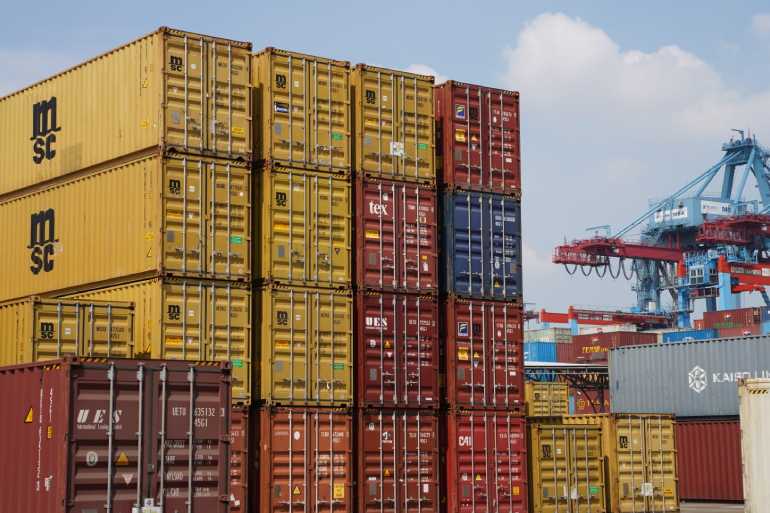
Jakarta, March 18, 2026 – IPC Terminal Petikemas (IPC TPK) has ensured full operational readiness by providing round-the-clock loading and unloading services, 24 hours a day, 7 days a week (24/7) across all terminals, in anticipation of a surge in container traffic ahead of Eid al-Fitr while also supporting the government’s policy on freight transport restrictions during the mudik period.
This measure was taken in response to increasing national logistics activity, particularly in the domestic segment, which has shown significant escalation entering the third week of Ramadan. At Domestic Container Terminal 2 (TP2), activity surged by approximately 37.5% compared to the previous week, driven by increased throughput and vessel call frequency, which in turn affected the Yard Occupancy Ratio (YOR).
IPC TPK’s Corporate Secretary, Pramestie Wulandary, stated that this rise in container traffic had been anticipated through the strengthening of an integrated and responsive operational system.
“We fully support the government’s policy in regulating freight transport restrictions during the mudik period. To that end, IPC TPK ensures that loading and unloading services continue to run optimally 24/7, backed by intensive monitoring and the readiness of operational personnel across all lines,” said Pramestie.
To maintain the smooth flow of logistics and prevent congestion within the port area, IPC TPK has implemented a number of strategic mitigation measures. These include optimizing gate pass services, utilizing Line 2 container yards as a buffer for Line 1, collaborating with several supporting container depots around Tanjung Priok, and strengthening traffic management and safety control functions through the deployment of Port Facility Security Officers (PFSO) at congestion-prone points.
In line with the planned implementation of freight transport restrictions from March 13 to 29, IPC TPK projects an acceleration in delivery activities by customers prior to the start of that period.
To this end, the company is actively urging service users to expedite container pickup for delivery to depots around North Jakarta in order to avoid potential post-Lebaran congestion.
“Accelerating delivery before the restriction period is key to maintaining supply chain continuity. With synergy between terminal operators, regulators, and service users, we are optimistic that national logistics flows will remain well-managed throughout the Lebaran period,” Pramestie concluded.
IPC TPK is also continuing to strengthen coordination with the Harbourmaster and Port Authority Office (KSOP), relevant agencies, and shipping companies to ensure the synchronization of vessel arrival schedules and the smooth flow of containers across all terminals.