

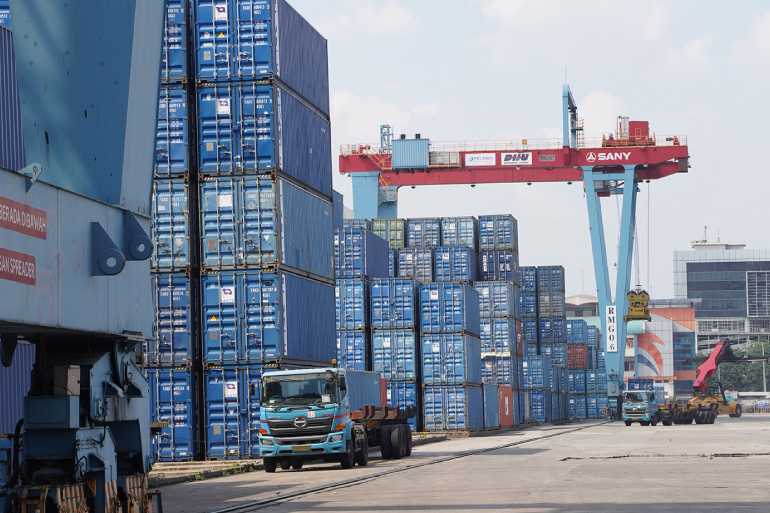
Jakarta, April 10, 2026 – Vessel visits and container traffic at IPC TPK following the Lebaran holiday have shown a declining trend compared to the pre-Lebaran period. Based on operational data, vessel calls dropped from 121 calls during the pre-Lebaran period to 88 calls in the post-Lebaran period of 2026, a decrease of approximately 27%. Container traffic also declined from 77,577 TEUs to 47,775 TEUs.
This decline is consistent with the trend observed during the previous year’s Lebaran period, reflecting a shift in logistics distribution patterns over the past two years, where service users have tended to ship goods earlier ahead of the Lebaran period.
This pattern is closely linked to operational arrangements and freight flow restrictions during the Lebaran period, including gate pass quota management and vessel arrival management at Tanjung Priok Port. During the first week following Lebaran, operational capacity was set at a maximum of 50%, gradually returning to normal in the following week. These conditions have encouraged service users to accelerate shipments or engage in front-loading before the restriction period, resulting in a generally softer post-Lebaran activity level.
IPC TPK’s Corporate Secretary, Pramestie Wulandary, explained that this trend reflects a shift in Lebaran logistics patterns over the past two years. “Over the past two years, we have observed a shift in Lebaran logistics patterns. Service users now tend to ship goods earlier, ahead of the operational restriction period and port traffic management measures, so that post-Lebaran vessel activity does not spike as it once did — instead, it tends to normalize or even decline. This indicates increasingly well-planned and coordinated logistics among terminal operators, shipping lines, and service users.”
While the decline in post-Lebaran vessel calls is notable, this does not necessarily indicate an overall reduction in logistics activity. Rather, it reflects an adjustment in distribution patterns and logistics planning aimed at avoiding congestion during the Lebaran period.
In closing, Pramestie added, “This pattern shows that logistics coordination and planning among port stakeholders is improving, allowing cargo flows to be distributed more evenly rather than concentrated in a single period. As a result, port operations continue to run smoothly and congestion can be effectively anticipated.”
IPC TPK, together with all port stakeholders, continues to coordinate to ensure the smooth flow of logistics both before and after Lebaran, so that cargo distribution remains orderly, controlled, and free from congestion at the port area and along access roads leading to the port.