

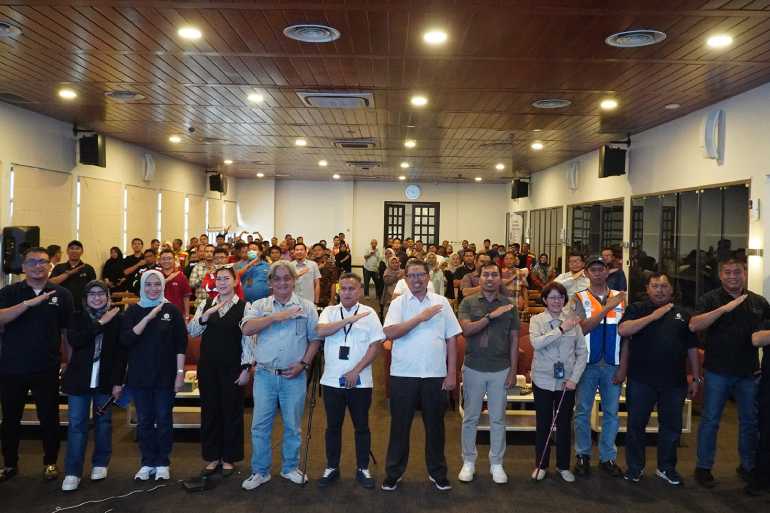
Jakarta, February 18, 2026 – In commemoration of the 2026 National Occupational Safety and Health (OHS/K3) Month, IPC Terminal Petikemas (IPC TPK) held a QHSSE Forum themed “Defensive Driving” at the Museum Maritim Indonesia on Thursday (12/2). The event reflects the company’s commitment to strengthening the safety culture within the dynamic and high-risk port environment.
The forum was attended by IPC TPK President Director Guna Mulyana, IPC TPK Director of Operations and Engineering Ahmad Mimbar, representatives from entities within the Pelindo Group, business partners, and stakeholders operating in the Tanjung Priok Port area. The event was also accompanied by free health check-ups for participants as part of the company’s concern for workers’ health.
The event was opened by Yandri Trisaputra, Executive General Manager of Pelindo Regional 2 Tanjung Priok. In his remarks, he emphasized that operational safety must begin with individual discipline.
“Safety in the port environment begins with personal discipline. Defensive driving is not only about driving techniques, but also about attitude, mindset, and the ability to control emotions amid operational pressures,” said Yandri.
Carrying the theme of Defensive Driving, the forum discussed the importance of situational awareness, vigilance toward heavy equipment blind spots, compliance with operational traffic lanes, and emotional control when interacting with logistics traffic within the port area.
As an area with high mobility—from container trucks, reach stackers, RTGCs, to other operational vehicles—the port has a significant level of potential accident risk. Based on data from the Ministry of Manpower, nationally, workplace accident cases still reach hundreds of thousands annually, with the transportation and warehousing sectors among the major contributors. Within the port environment, the implementation of defensive driving is considered a strategic step to reduce the potential for incidents that could impact worker safety as well as the smooth flow of logistics.
This QHSSE Forum is part of a series of National OHS Month activities complementing IPC TPK’s ongoing efforts to strengthen its safety culture, including safety induction, K3 refreshment programs for equipment operators and truck drivers, safety patrols and audits on personal protective equipment (PPE) compliance, emergency response and workplace accident simulations, the internal campaign “Safety Starts With Me,” periodic health examinations for operational workers, and the management of Dangerous Goods through standard operating procedures (SOP) for handling hazardous and toxic materials (B3) to ensure that loading and unloading processes remain safe without disrupting terminal operations.
IPC TPK management emphasized that workplace safety has a direct correlation with productivity and the smooth flow of loading and unloading activities. Any incident, no matter how small, has the potential to disrupt terminal operations, slow container movements, and affect the national supply chain.
Through strengthening the safety culture and implementing defensive driving collaboratively with partners and service users, IPC TPK aims to create a zero-accident environment while ensuring that loading and unloading activities run safely, orderly, and efficiently.
IPC TPK Corporate Secretary Pramestie Wulandary emphasized that safety is the primary foundation of the company’s operational performance.
“Most activities at container terminals involve the movement of heavy equipment and vehicles. Therefore, defensive driving is a mandatory competency for all personnel and partners. We want to ensure that every individual understands that even a small act of negligence can have major consequences for safety and operational continuity,” she said.
As part of the Pelindo Group, IPC TPK remains committed to continuously promoting the consistent and integrated implementation of an OHS culture to support the creation of ports that are safe, reliable, and competitive.