

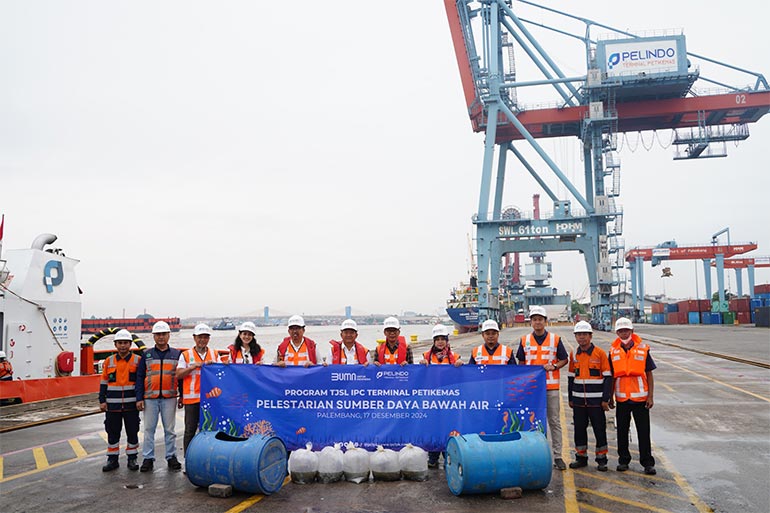
Palembang, December 17, 2024 – IPC Terminal Petikemas (IPC TPK), a subsidiary of Pelindo’s Terminal Petikemas Subholding, carried out a Social and Environmental Responsibility (TJSL) Program focused on the Preservation of Aquatic Resources by releasing 5,150 pangasius catfish fry into the Musi River, South Sumatra. This initiative supports the achievement of Sustainable Development Goal (SDG) No. 14, which focuses on marine ecosystems.
IPC TPK President Director Guna Mulyana stated that this reflects the company’s commitment to environmental preservation through the restoration of aquatic ecosystems. Releasing fish into their natural habitats aims to restore populations of species threatened by overfishing and ecosystem degradation.
The program was conducted in conjunction with World Wildlife Conservation Day, observed annually on December 4, to promote the conservation of flora and fauna.
In implementing its TJSL programs, IPC TPK continuously encourages collaboration within the port ecosystem, including associations, business partners, and service users. Effective environmental impact reduction requires the involvement of multiple stakeholders in addressing the effects of container handling activities. This particular TJSL program, involving the release of fish fry, was attended by Hilarius Purwanto Kurniawan, Chairman of the Regional Leadership Council (DPW) of ALFI/ILFA Palembang, as well as the IPC TPK President Director and management team.
In 2024, IPC TPK has carried out several TJSL Environmental Development Pillar initiatives, including coral reef conservation in collaboration with Pelindo Terminal Petikemas and the Lampung Underwater Community at Pahawang Island, providing sanitation assistance through 11 septic tanks with a capacity of 1,000 liters for residents of Papanggo Village, and greening programs at Tanjung Priok Port and IPC TPK Pontianak.
“We extend our gratitude to IPC TPK for involving us in preserving ecosystems while boosting the local economy in Palembang. We hope this activity helps maintain underwater ecosystems and enhances the livelihoods of communities around the Musi River,” concluded Hilarius Purwanto Kurniawan, Chairman of DPW ALFI/ILFA Palembang.