

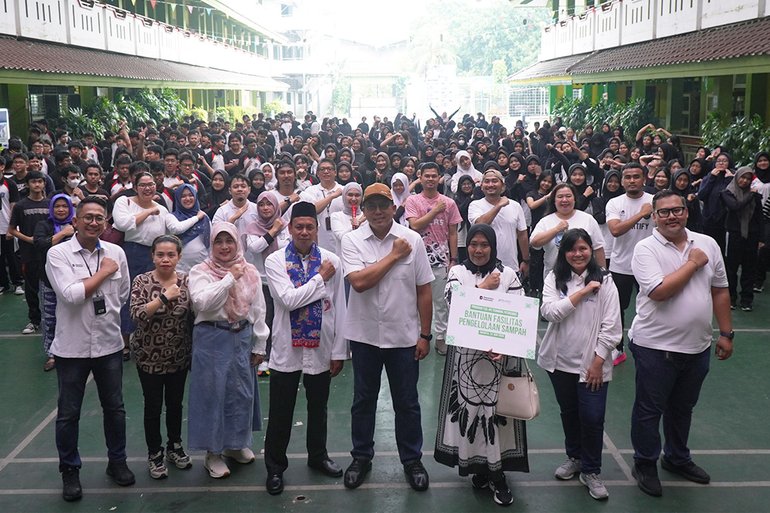
Jakarta, June 23, 2026 – IPC Terminal Petikemas (IPC TPK) organized a Corporate Social Responsibility (CSR) program titled “Bakti IPC TPK” under the theme “A Day Exploring the World of Container Terminals with IPC TPK.” The educational and community outreach initiative was held at State Senior High School (SMAN) 13 Jakarta as part of the company’s efforts to strengthen engagement with communities surrounding its operational areas while introducing the logistics and container terminal industry to younger generations, particularly students in North Jakarta.
Yanuar Evyanto, Director of Finance, Human Resources, and Risk Management of IPC TPK, emphasized the importance of raising awareness among students about the strategic role of ports and supply chains in supporting Indonesia’s economy.
“Through the Bakti IPC TPK program, we hope to broaden students’ understanding of the vital role ports and supply chains play in driving the national economy. We also strongly support waste management initiatives in schools, as they are closely aligned with the Environmental, Social, and Governance (ESG) principles implemented by IPC TPK,” said Yanuar.
The Bakti IPC TPK program featured a series of interactive activities, beginning with opening remarks from IPC TPK’s Board of Directors, followed by an educational session introducing the company’s container terminal business and the logistics industry. As a tangible contribution to improving waste management at the school, IPC TPK donated waste bins and a waste shredding machine to support environmentally responsible waste handling practices. The event also included quizzes and educational games with attractive prizes, creating an engaging learning experience for the students.
The highlight of the program was a Futsal Coaching Clinic, led by Randy Satria, an IPC TPK employee and former member of the Indonesian National Futsal Team. During the coaching session, students were introduced not only to fundamental futsal techniques but also to the values of sportsmanship, perseverance, teamwork, and collaboration—principles that also underpin IPC TPK’s professional work culture. The program concluded with a joint school clean-up activity involving students, teachers, and IPC TPK representatives.
“We hope IPC TPK will continue to consistently deliver community development programs that create long-term positive impacts, whether by supporting environmental sustainability through independent school waste management initiatives or by contributing to education and youth development through professional learning opportunities and sports talent development,” Yanuar concluded.