

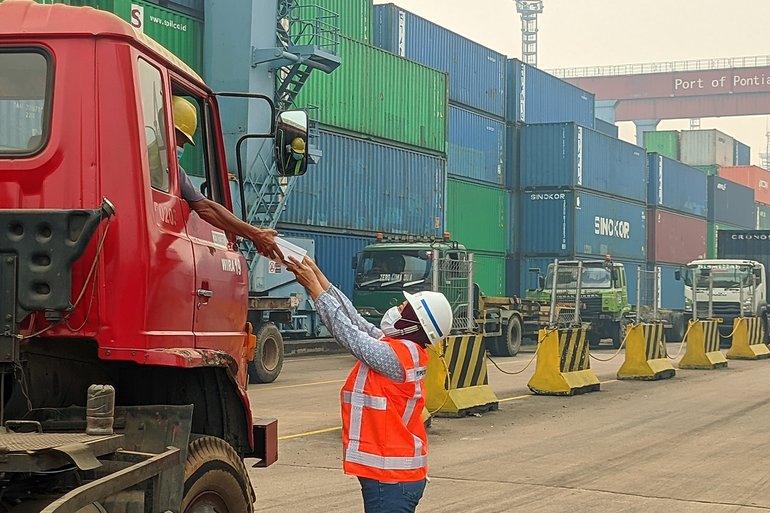
Pontianak, September 4, 2026 – IPC Terminal Petikemas (IPC TPK) Pontianak Terminal commemorated National Customer Day 2026 by distributing snack packages and free masks to customers and container truck drivers operating within the terminal area. This initiative was carried out amid extreme conditions caused by widespread forest and land fires (Kebakaran Hutan dan Lahan or Karhutla) across West Kalimantan, which resulted in heavy exposure to haze. The initiative reflects the company’s commitment to safeguarding the health of field workers who serve as the frontline in maintaining the continuity of the goods supply chain.
“This year’s National Customer Day serves as an opportunity for us to express our appreciation while providing tangible protection for customers and truck drivers who continue to work tirelessly. Amid exposure to haze caused by forest and land fires, the safety and health of field personnel are our top priorities to ensure that loading and unloading operations and goods distribution across West Kalimantan can continue smoothly and safely,” said M. Loutfie Hidayat, Terminal Head of IPC TPK Pontianak.
The distribution of protective masks and snack packages was intended to minimize the risk of respiratory illnesses, such as Acute Respiratory Infections (ARI), which may affect logistics fleet drivers while traveling by land or carrying out loading and unloading activities. Health issues among truck drivers could potentially disrupt operational efficiency and slow the movement of goods into and out of the port. Therefore, attention to occupational health directly contributes to the stability of the regional logistics supply chain.
Strong synergy between the management of IPC TPK Pontianak Terminal and its stakeholders has helped strengthen the port’s operational resilience, ensuring that essential goods and key commodities for the people of West Kalimantan can continue to be distributed on time despite challenging and extreme conditions.
“Through continuous collaboration and care, we remain committed to improving service quality, ensuring workplace safety, and maintaining the efficient movement of goods across West Kalimantan to support regional economic growth,” concluded Loutfie.